Executive Summary
In the past year, offshore floating data centers have shifted from speculative designs to concrete, near-term pilots—underscoring a pragmatic alternative to high-cost, high-latency space-based data infrastructure. TechCrunch’s recent survey highlights a spectrum of projects, from Aikido’s 100 kW submerged demo slated for H2 2026 to Japan’s Mitsui O.S.K. Lines and Kinetics planning 20–72 MW vessel conversions for operation by 2027. Meanwhile, the International Energy Agency (IEA) models suggest up to ~40 percent operational carbon savings when these units co-locate with offshore renewables and leverage seawater cooling. This transition reframes the debate over next-generation data center siting: shifting the structural promise from spaceborne novelty toward maritime pragmatism, while exposing a complex web of engineering, ecological, and regulatory challenges.
Key Findings
- Aikido’s 100 kW submerged data center demo is scheduled off Norway for H2 2026, with plans to scale to a 10–12 MW module paired with a 15–18 MW floating wind turbine by 2028 (TechCrunch).
- Mitsui O.S.K. Lines and Kinetics signed a memorandum in 2025 to convert 9,700-ton ro-ro carriers into 20–72 MW floating data centers, targeting conversions in 2026 and operations in 2027 (company statements).
- The IEA’s 2024 report projects up to ~40 percent reductions in operational carbon footprint through on-site renewables integration and seawater cooling (IEA study, 2024).
- Proposed offshore units span from 0.1 MW to 72 MW in capacity; Mitsui claims a one-year retrofit timeline versus roughly four years for new land builds (company statements).
- Unresolved technical and environmental questions include hull corrosion, wave-induced fatigue, subsea cable resilience, and potential long-term marine ecosystem impacts (TechCrunch analysis).
- Regulatory frameworks around data sovereignty, licensing in exclusive economic zones (EEZs), and environmental permitting remain undeveloped across key jurisdictions.
Concrete Pilots Signal a Shift from Concept to Deployment
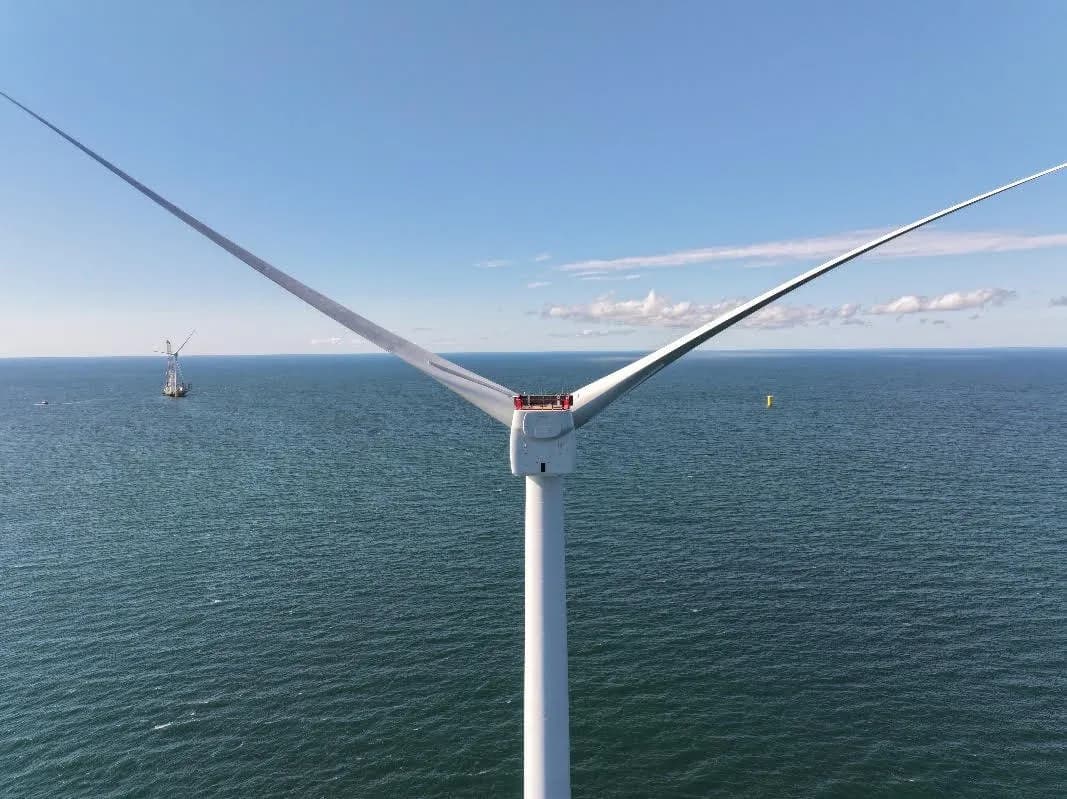
The offshore floating data center concept, long relegated to speculative white papers and futurist panels, has gained measurable traction through a series of announced pilots and feasibility studies. Aikido, an offshore wind developer, is spearheading a submerged approach: a 100 kW data module housed below a floating turbine off Norway, slated to begin operations in the second half of 2026. According to TechCrunch, the demo is designed to validate continuous seawater cooling and direct power integration under realistic wave and wind loads. Building on that prototype, Aikido targets a 10–12 MW iteration mated to a 15–18 MW turbine in UK waters by 2028, reflecting growing confidence in modular offshore siting.
Parallel efforts by Mitsui O.S.K. Lines and Kinetics focus on converting existing ro-ro car carriers into 20–72 MW floating data centers. Per company statements, a memorandum signed in 2025 initiates a feasibility study, with vessel retrofits scheduled to begin in 2026 and first operations anticipated in 2027. The carrier conversion path is pitched as a one-year retrofit versus an estimated four-year build timeline for a comparable land-based facility, leveraging available hulls, power generators, and marine certifications to accelerate time to operation.
Additional initiatives include a larger consortium in Yokohama planning an AI-focused floating data node powered by nearby offshore wind farms, and a California Energy Commission filing in 2025 to assess feasibility of ocean-powered data centers along the state’s coast. Collectively, these pilots offer the first empirical data points on cooling performance, grid interconnection, vessel stability, and marine environmental impacts.
Why Marine Over Orbital?
Space-based data centers have captured imaginations with promises of unobstructed solar power, unparalleled isolation, and even vacuum cooling. Yet orbital concepts carry steep barriers: multi-million-dollar launch costs per payload, intricate thermal management in vacuum, signal latency challenges for low-earth-orbit architectures, and decades-long technology risk horizons. By contrast, the maritime path trades the novelty of orbital mechanics for established civil-marine engineering, leveraging known technologies like seawater heat exchangers, floating foundations, and subsea power cables.
Seawater cooling offers a direct thermodynamic advantage: a near-constant temperature sink with high heat capacity, reducing reliance on air-conditioning chillers and their associated carbon emissions. When paired with colocated floating wind, wave, or tidal turbines, offshore data hardware can tap renewable power with fewer grid losses—a synergy the IEA’s 2024 modeling suggests could lower operational carbon footprints by up to ~40 percent. Existing vessel hulls and marine supply chains sidestep common land-based siting challenges, such as permitting delays, land acquisition disputes, and local opposition to large-scale electric draws.

This nautical model does not eliminate novel engineering hurdles—marine corrosion, wave-motion fatigue, subsea cable routing, and remote maintenance all introduce new risk domains. Nonetheless, the relative predictability of marine environments compared to orbital launch dynamics and space-grade thermal vacuums positions offshore data centers as nearer-term, lower-capital-risk alternatives to space-borne deployments.
Structural Implications for the Data Center Landscape
The rise of offshore floating data centers reframes coastal capacity planning, disaster resilience strategies, and carbon reduction roadmaps across cloud and edge operators. For hyperscale cloud providers, vessel-based nodes introduce mobility: capacity can be repositioned to match shifting demand geographies or redeployed following natural disasters. Coastal jurisdictions gain an extra lever to absorb regional compute demand without permanent land footprint expansion—potentially reshaping host-state influences on data infrastructure siting.
Edge providers and telcos may find value in deploying near-shore modules to serve latency-sensitive applications in maritime hubs and island communities, reducing last-mile fiber investments. Regulatory aspirations to decarbonize digital infrastructure gain empirical support from the IEA’s offshore renewables coupling model. Yet the structural shift introduces complexity in asset classification: vessels may fall under maritime safety regulators rather than traditional building and electrical codes, blurring lines between shipping, energy, and data industries.
Financial markets are beginning to price in this emerging asset class. Investors tracking Mitsui’s retrofit claims or Aikido’s turbine-tethered modules will face new due-diligence criteria around marine engineering standards, environmental impact assessments, and cross-sector partnerships. The evolving interplay between port authorities, offshore wind developers, and cloud operators may redefine who exerts power over digital infrastructure in coastal zones and international waters.
Technical and Ecological Risks
Offshore deployments expose sensitive electronics and power systems to corrosive saltwater aerosols, persistent humidity, and mechanical stresses from wave and swell. Engineering solutions such as sealed containerized racks, reinforced hull attachments, and vibration-damping mounting systems are in development but remain untested at scale. Subsea cables must endure constant motion at anchor points and potential fishing or shipping interactions, raising questions about durability and redundancy.
Long-term ecological impacts remain largely unquantified. Marine biologists note that concentrated heat discharge and electromagnetic fields from subsea cables could alter local species behavior and habitat patterns. Pioneering pilot studies are expected to generate the first environmental monitoring data, but a comprehensive marine impact baseline is missing. The California Energy Commission’s 2025 filing highlights the need for standardized marine-impact assessments before full-scale deployments proceed.
Equipment reliability in remote offshore environments will hinge on bespoke maintenance protocols, potentially involving autonomous surface vessels or divers—a logistical challenge that contrasts sharply with centralized land-based data center operations. Insurance markets are only beginning to model risk profiles for floating compute assets, with premiums likely influenced by storm intensity, marine traffic density, and proximity to ports of call.
Governance and Human Stakes
Data sovereignty emerges as a potent human-stakes consideration. Offshore units operating in EEZs or international waters may fall into regulatory grey zones, complicating jurisdiction over data privacy, encryption standards, and law-enforcement access. Coastal states could assert regulatory leverage through port call conditions or maritime licensing, potentially turning floating data hubs into instruments of digital influence or contestation.
Communities adjacent to offshore wind and shipping corridors may face new environmental justice debates, balancing local economic benefits against marine ecosystem concerns and potential noise or visual pollution. The emerging industry alliances between shipping firms, cloud operators, and renewable developers signal a shift in power dynamics: traditional port stakeholders could gain outsized influence over digital infrastructure strategy, while landlocked regions might see diminished leverage.
National security agencies are tracking the dual-use potential of offshore compute platforms: mobile data centers could support military communications or disaster-relief operations, straddling civilian and defense interests. The intangible stakes—control over data flows, resilience against terrestrial disruptions, and alignment with decarbonization goals—underscore how floating data centers extend beyond technical novelty into the realm of sovereignty and strategic power.
Emerging Regulatory Landscape
Current legal frameworks treat floating structures under maritime and shipping regulations, not data center codes. Exclusive economic zones grant coastal states rights over resources and installations up to 200 nautical miles offshore, but data regulation regimes seldom address floating digital infrastructure. The California Energy Commission’s 2025 feasibility filing calls for marine environmental permits akin to offshore oil and gas projects, foreshadowing a patchwork of regional requirements.
International bodies such as the International Maritime Organization (IMO) and the International Telecommunication Union (ITU) have not yet published guidelines specific to floating compute assets. Flag state registration may determine safety and labor standards onboard, while port state control could impose inspections focused on data security and environmental impact. Data privacy laws like the EU’s GDPR lack explicit provisions for offshore units, raising questions about cross-border enforcement and consent frameworks when servers drift beyond territorial waters.
Insurance underwriters, maritime regulators, and environmental agencies are convening working groups to address classification, permitting, and liability. Early pilots will set precedent for subsea cable routing rights, heat plume monitoring protocols, and seabed impact mitigation—elements that will shape the regulatory environment for years to come.
Implications
- Operators evaluating coastal capacity must factor in new asset classes that blend maritime engineering with digital infrastructure, shifting capital allocation away from purely land-based builds.
- Partnership models are evolving: alliances among wind developers, shipping firms, and cloud providers indicate a blurring of industry boundaries and the emergence of hybrid marine-tech consortia.
- Carbon reduction roadmaps may incorporate offshore modules as a credible strategy for decarbonizing compute, provided pilot emissions data validate IEA’s ~40 percent reduction projection (IEA, 2024).
- Data sovereignty frameworks will need to adapt to offshore deployments, potentially granting coastal states new leverage over digital governance and cross-border data flows.
- Marine environmental assessments from early demos will shape future permitting regimes, defining acceptable thresholds for thermal discharge and electromagnetic interference.
What to Watch Next
- Results from Aikido’s Norway demo in H2 2026, particularly cooling efficacy and marine corrosion data.
- Completion of the Mitsui O.S.K. Lines and Kinetics feasibility study (expected late 2025) and the timeline for first vessel retrofits in 2026.
- Regulatory guidance emerging from the California Energy Commission’s 2025 feasibility filing and any subsequent environmental impact reports.
- IMO or ITU working group publications addressing classification, safety, and data governance for floating compute platforms.
- Community and NGO environmental assessments following early pilots, which may influence port consent processes and marine permit stipulations.