Executive summary — what changed and why it matters
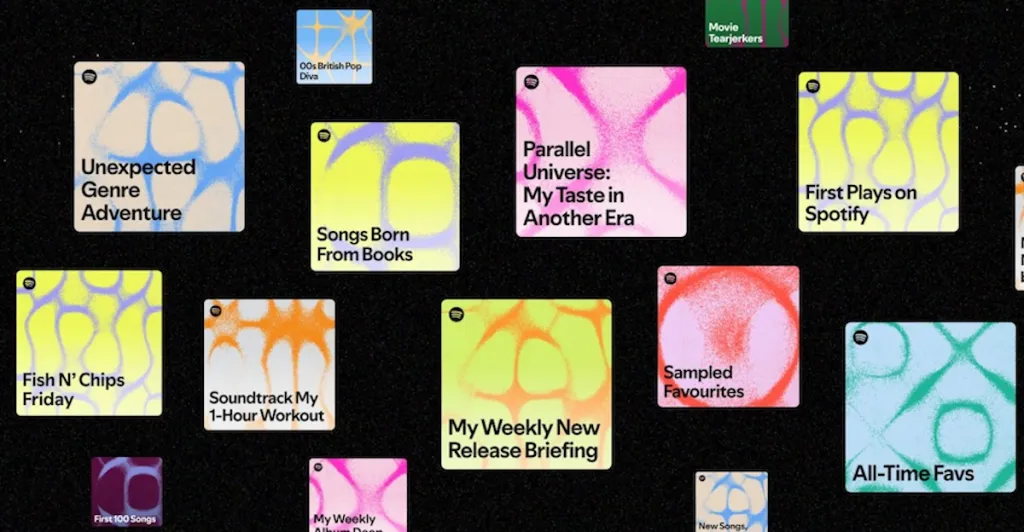
Spotify’s Prompted Playlists pivot discovery toward conversational personalization but underscore persistent constraints around model quality, language support, and operational cost trade-offs. On Feb. 23, 2026, Spotify expanded its AI-powered Prompted Playlists beta to Premium users in the U.K., Ireland, Australia, and Sweden. The feature uses English natural-language prompts to generate 30-track playlists informed by listening history and global trends, with brief track-level explanations. Beta limits, English-only support, and mobile-only gating remain in place.
Breaking down the rollout
The tool is accessed via Library → Create → Prompted Playlist in the mobile app. Users enter prompts specifying mood, era, or thematic references; the system returns a 30-track list with a “Notes” toggle for one-line rationales. Scheduled refreshes—daily or weekly—are optional. Users report hitting caps after roughly 20–30 generations, and support pages note English-only inputs and Premium-mobile requirements. Documentation indicates deleted playlists may not be recoverable.

Tension between personalization and practical limits
This rollout exemplifies how conversational interfaces can accelerate discovery while spotlighting platform constraints. Free-form prompts promise richer user agency, yet quality consistency and language support shape the feature’s reach. Beta generation caps and mobile-only access further reveal Spotify’s need to balance server costs against engagement gains.
Competitive context
Algorithmic curation is standard across streaming services; natural-language prompts and explicit rationales distinguish Spotify’s approach. Rivals could replicate prompt-driven UX rapidly, but latency, multilingual support, and explanation accuracy will determine whether Prompted Playlists endures beyond beta.

Governance and human stakes
The embedded use of listening history raises questions about profiling and transparency. Track rationales surface metadata gaps or licensing ambiguities, reflecting broader concerns over AI explainability and rights management in music. Beta caps mitigate cost and misuse risks but may also stifle creative exploration for engaged users.

Strategic signals and likely trade-offs
- Engagement vs. cost control: Tight generation caps imply Spotify is monitoring inference loads and user engagement metrics before scaling capacity.
- Localization roadmap: English-only support signals initial focus on primary markets; expansion into non-English territories will likely hinge on prompt success rates and adoption signals.
- Model refinement loop: Track-level explanations create a new metadata layer Spotify can mine to identify cultural representation gaps and refine recommendation algorithms.
- Compliance posture: Documented constraints around data use and playlist deletion suggest an early governance framework balancing user autonomy with legal risk management.
Taken together, Prompted Playlists reflects Spotify’s strategic move toward conversational personalization while revealing the operational, technical, and ethical trade-offs inherent in deploying AI-driven discovery at scale.