Executive summary — an iterative loop replaces the handoff
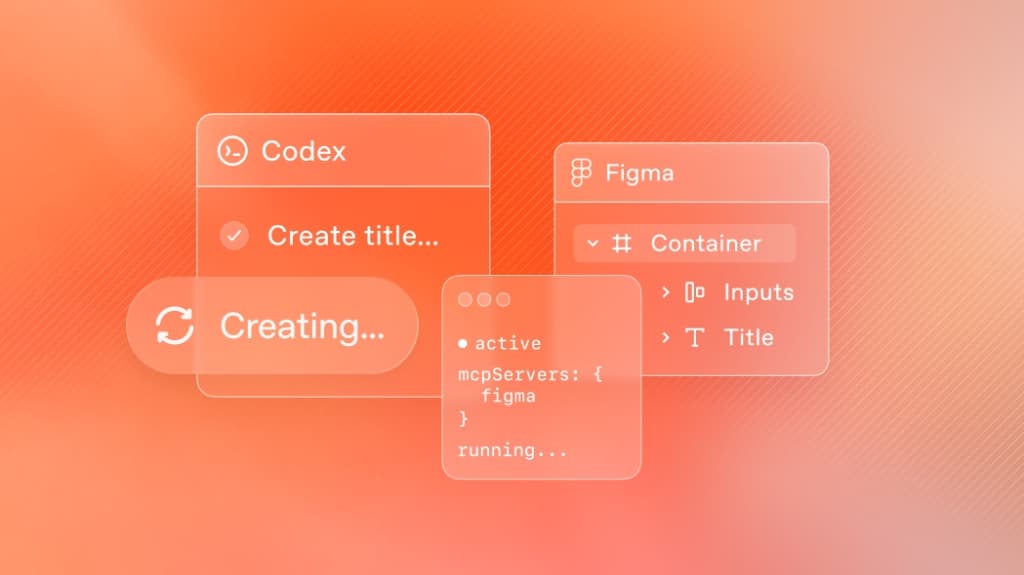
Figma’s integration with OpenAI’s Codex marks a fundamental shift from a linear design-to-code handoff toward a continuous bidirectional workflow. By exposing Figma’s visual layer data—frames, positions, colors, and inferred component structures—to Codex via the Model Context Protocol (MCP) server, visual artifacts can flow into generated HTML/CSS/React prototypes and return as code-derived canvases for further refinement. This turnaround aims to collapse role boundaries without forcing designers into full-time coding or engineers into pure visual design.

Key takeaways
- Structural insight: The workflow transitions from a one-way handoff to an interactive design↔code loop enabled by Figma’s MCP server.
- Scale signals: OpenAI reports 1 million+ weekly active Codex users and 1 million macOS app downloads in its first week—metrics that underpin Figma’s timing.
- Vendor claims: Demos cite 80–90% prototype fidelity when formal design systems exist; independent benchmarks are not yet available.
- Platform strategy: Dual integrations with OpenAI (Codex) and Anthropic (Claude Code) signal a hedge against vendor lock-in and a bid for customer choice.
- Governance priorities: IP ownership, security review of generated code, and exit paths from external LLM dependencies emerge as critical concerns.
Breaking down the integration
Technically, Figma’s MCP server streams visual layer data to Codex, forcing the model to infer component roles from rendered shapes rather than from semantic metadata. Generated code can support hot-reload-style roundtrips back into the canvas, enabling teams to toggle between visual and code views. This bidirectional loop is distinct from prior partnerships, which focused on one-way conversion or annotation rather than full interactive iteration.

The integration follows Figma’s February 2026 deal with Anthropic’s Claude Code by exactly one week, illustrating a deliberate dual-vendor approach. Codex’s existing presence in ChatGPT apps since October 2025 and its recent macOS app launch provided both technical trust and user momentum for Figma’s decision.

What it does well—and remaining gaps
- Context preservation: Designers gain visibility into code structure without leaving the canvas, while engineers see visual layouts without manual reverse engineering.
- Speed gains: For teams with mature component libraries, code generation typically outpaces manual translation of visual assets into front-end frameworks.
- Gap in metadata: Codex must infer canonical component definitions visually, leading to inconsistent output when design-system metadata is absent or outdated.
Concrete failure modes
- Component misidentification: Without explicit metadata, Codex may map nested frames to incorrect or duplicated React components, requiring manual cleanup.
- Dependency bloat: Generated UI code can introduce superfluous CSS or third-party libraries, inflating bundle size and complicating security audits.
Risks and governance considerations
- Production readiness (vendor-attributed): Demonstrations describe “production-ready” outputs with no independent validation of code quality or performance.
- Intellectual property: Automated code synthesis raises questions about licensing of derived components and traceability of third-party snippets.
- Security and supply chain: Without model-level logging, audit trails of generated dependencies remain limited, heightening supply-chain exposure.
- Operational lock-in: Heavy reliance on MCP and LLM outputs can entangle design-to-code workflows with specific AI vendors absent clear exit strategies.
Diagnostic implications for stakeholders
- Design-led product teams will likely notice faster prototyping cycles but trade off manual code review efforts to ensure conformity with quality standards.
- Enterprise product organizations face comparative evaluations of fidelity, compliance, and security profiles across Codex and Claude Code before scaling to customer-facing releases.
- Engineering leaders encounter generated code behaving as scaffolding, prompting investments in linting, automated security scans, and provenance capture for audit readiness.
- Procurement and legal teams observe emerging negotiations over IP and data-use terms, with emphasis on export-control compliance and service-level guarantees.
What to watch next
- Independent benchmarks measuring fidelity across teams with varying design-system maturity levels.
- Usage telemetry from MCP installations as an indicator of bidirectional adoption velocity.
- Anthropic’s feature differentiation announcements for Claude Code in response to Codex’s distribution advantage.
- Enterprise case studies or failure reports that validate or challenge vendor readiness claims.