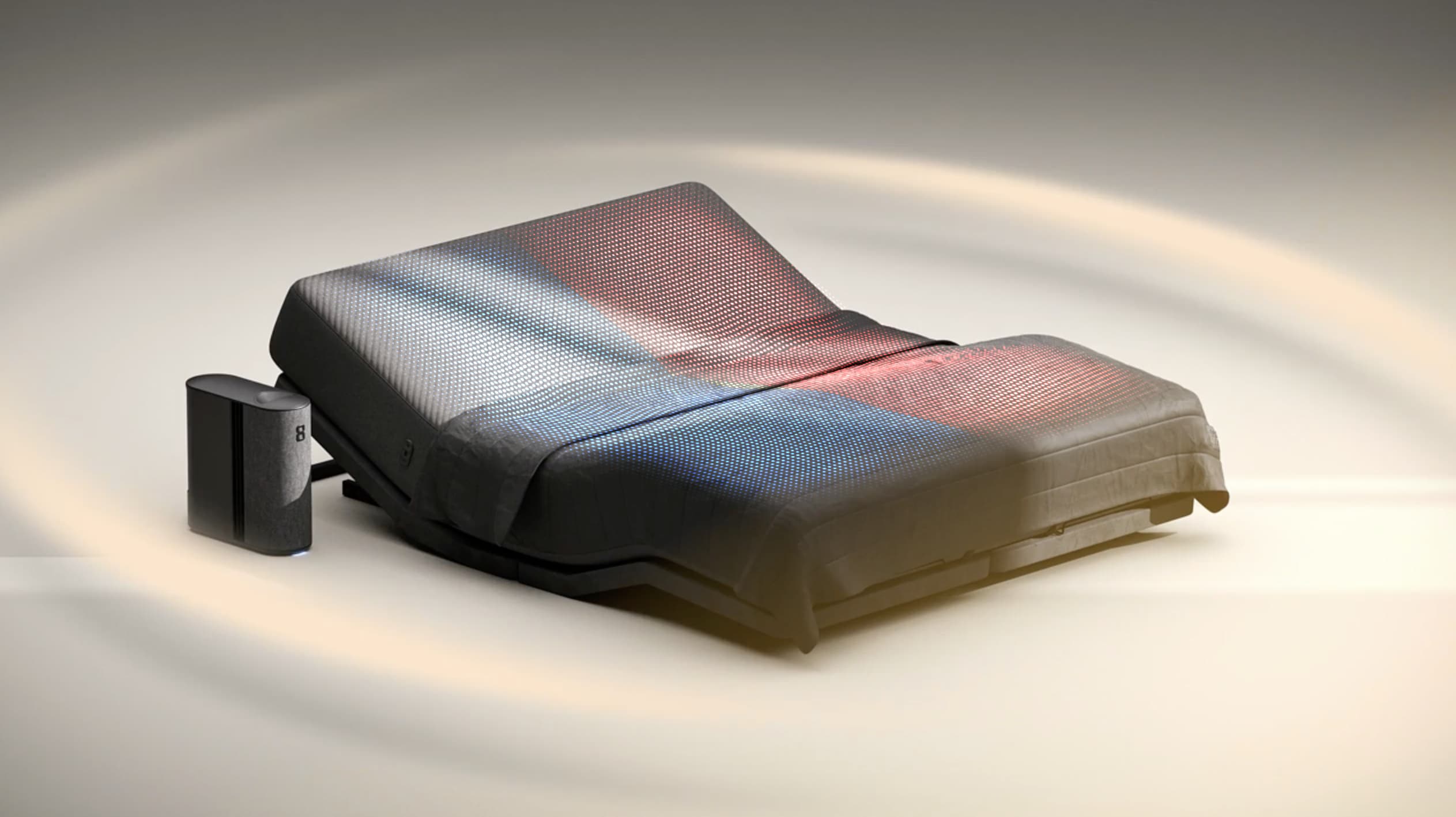
Executive summary
Eight Sleep announced a $50 million financing at a reported $1.5 billion post‑money valuation on March 4, 2026, and described a strategic shift from consumer sleep optimization toward “predictive, AI‑driven health,” including clinical studies and FDA filings, according to company disclosures and reporting. The single structural insight: Eight Sleep’s valuation and pivot mark a shift in sleep tech from consumer wellness to clinically regulated health devices, making hardware ownership, an installed data footprint, and clinical validation the critical moat.
This is not merely a funding milestone. It signals a re‑sorting of incentives and power in an industry where nightly, passive sensors now sit between intimate bodily data and clinical outcomes. Eight Sleep reports operational momentum in 2025—free cash flow positivity and product launches such as Pod 5 and accessories—and total disclosed funding that now exceeds roughly $310 million, per company statements and public reporting. The company also reports having processed more than 600 million sleep hours across its installed base, a data asset the firm highlights as foundational to its AI ambitions.
Key takeaways
- Raise and valuation: Eight Sleep closed a reported $50M round at a $1.5B post‑money valuation on March 4, 2026, led by Tether Investments, according to reports.
- Strategic pivot: Management frames the business as moving from temperature‑based sleep optimization toward a broader AI‑driven health sensing platform built on non‑wearable Pod data and clinical validation efforts.
- Data footprint: The company reports processing 600M+ sleep hours; that installed base is presented as a competitive asset for model training and longitudinal signal capture.
- Clinical ambition: Public statements cite planned clinical studies and FDA submissions for sleep apnea detection, shifting the product from wellness adjunct into the orbit of regulated diagnostics if pursued.
- Market comparables: Reporting points to a large sleep‑tech market projection (reported figures: ~$24.9B in 2024 to ~$134.7B by 2034) and recent late‑stage capital events such as Oura’s reported October 2025 round.
What changed structurally
The familiar axis of consumer sleep tech—comfort, better REM, marketing to wellbeing—has tilted. Where the category once depended on lifestyle positioning, the moment Eight Sleep highlights clinical studies and FDA filings it recasts some sleep products as instruments of health measurement. That recasting reweights three assets: control of hardware at the bedside; access to continuous, passive sleep data captured at scale; and the institutional legitimacy that clinical validation and regulatory clearance confer.
Hardware matters because it anchors an ongoing relationship with a user’s body. An installed Pod is not a one‑time purchase; it is a persistent sensor platform. The data it generates—thermal profiles, non‑invasive biometrics, nightly sleep architecture—becomes both a training signal for AI and a record that can be referenced in clinical contexts, employer programs, or insurance negotiations. Clinical validation matters because regulators and clinicians treat measurement accuracy, error profiles, and trial design as gatekeepers to medical use. Together, these assets reconfigure where authority and trust sit in sleep science: increasingly with device owners who also control the data pipelines.

Evidence and bounds
The drafting of any causal narrative requires restraint. The financing event and company disclosures provide a clear directional signal but not a predetermined outcome. Disclosed facts include the reported $50M round at $1.5B, prior rounds that brought total disclosed funding to roughly $310M, claimed profitability in 2025, and product rollouts like the Pod 5 and accessories. The firm reports an installed dataset of more than 600 million sleep hours, which management characterizes as the backbone of its AI models.
Market sizing referenced in coverage—reported projections from approximately $24.9 billion (2024) to $134.7 billion (2034)—illustrates investor expectations for growth in the category, not guaranteed adoption of clinical use cases. Comparable fundraising cited in recent reporting (for example, a large late‑stage round for another wearable reported in October 2025) signals capital appetite for plays that marry hardware with health data, but comparables are imperfect; wearables and under‑mattress sensors differ in signal modality, user stickiness, and regulatory exposure.
Human stakes and governance
The shift from lifestyle device to clinically inflected sensor carries human consequences beyond revenue models. When a bed sensor is positioned as a clinical screening tool, it alters who can make claims about health, who holds longitudinal records of intimate behavior, and what kinds of oversight become appropriate. Users’ sleep patterns, once framed as private wellness metrics, move into a zone where clinical interpretations could influence diagnoses, work accommodations, insurance assessments, or employer wellness interventions.
That movement concentrates power: companies that control bedside hardware, the ingested data, and the machine‑learning pipelines will possess asymmetric visibility into daily rhythms. The redistribution of interpretive authority—from clinicians and polysomnography labs to algorithmic outputs trained on proprietary datasets—raises questions about consent norms, data access, and the social consequences when an algorithmic sleep score intersects with hiring, performance evaluation, or medical advice.
Regulatory and validation realities
Public statements that cite planned FDA filings and clinical studies place Eight Sleep in a different regulatory tier than pure consumer wellness gadgets. Reporting indicates the company intends to pursue clinical studies and filings related to sleep apnea detection; the specifics of study design, endpoints, and regulatory pathway remain to be disclosed in company filings and trial registrations. Moving into that space typically foregrounds randomized designs or equivalently robust validation, transparent error rates, and post‑market surveillance—each of which reshapes product timelines, messaging, and risk profiles.
Data‑privacy and security questions also intensify when biometric streams are positioned as clinically relevant. The company’s emphasis on on‑device AI and Tether’s QVAC privacy technology (reported in coverage) is a technical claim that intersect regulators’ and privacy advocates’ concerns differently than consumer‑grade opt‑in analytics. The transnational footprint the company reports—operating in 34+ countries, according to disclosures—complicates compliance with heterogeneous privacy regimes.
Competitive dynamics
The strategic posture described in public reporting—doubling down on proprietary bed hardware and an installed data moat—narrows some competitive avenues and widens others. Commodity mattress makers may be unable to replicate a validated sensing stack without substantial R&D and clinical programs. Conversely, incumbents in regulated medical devices, and wearables companies that already possess clinical relationships, could contest the clinical legitimacy ladder by leveraging their own trial infrastructure and medical claims. Startups that lack hardware scale but offer better algorithmic methods or interoperability with electronic medical records might still change the competitive calculus.
Implications for stakeholders
- Investors: The reported round and the firm’s stated pivot increase the importance of due diligence around clinical protocols, reported data volumes and provenance, and unit economics post‑hardware sales; outcomes will likely shape valuation multipliers in the category.
- Health systems and employers: The move into clinical claims repositions bedside sensors as potential diagnostic adjuncts, altering procurement and liability considerations; outcomes of disclosed clinical studies and any regulatory clearances will be decisive for clinical adoption.
- Product teams at competitors: The public emphasis on an installed data footprint and regulatory ambition shifts competitive advantage toward firms that can combine hardware distribution with validated sensing and transparent performance metrics.
- Regulators and privacy bodies: A reported expansion into clinical use cases by a consumer hardware company raises jurisdictional and technical questions around device classification, algorithmic transparency, consent standards, and cross‑border data transfers.
What to watch next
- Official Eight Sleep materials for investor lists, detailed use‑of‑proceeds language, and filing documents that disclose clinical trial designs and endpoints.
- Registrations of clinical trials and pre‑market submissions, which will specify study size, comparator modalities, and primary performance metrics.
- Market and regulatory responses from incumbents in medical diagnostics and wearables—both in product positioning and in legal/regulatory engagement.
- Public reporting and third‑party validation that clarifies the claimed 600M+ sleep hours dataset: scope, geography, labeling, and signal quality.
Eight Sleep’s reported financing and public framing do not by themselves settle whether bed‑based sensors will become routine clinical tools. They do, however, mark a structural inflection: as consumer devices acquire clinical intent, the levers of credibility shift toward those who control hardware, accumulate longitudinal data, and clear the evidentiary hurdles set by regulators and clinicians. That shift recasts sleep tech as a site where questions of agency, medical authority, and data governance will play out with concrete consequences for users and institutions alike.