Thesis: Embedding Google’s Canvas directly into Search accelerates mainstream generative prototyping while fragmenting capabilities across subscription tiers and exposing enterprises to governance and integration trade-offs.
Why this matters
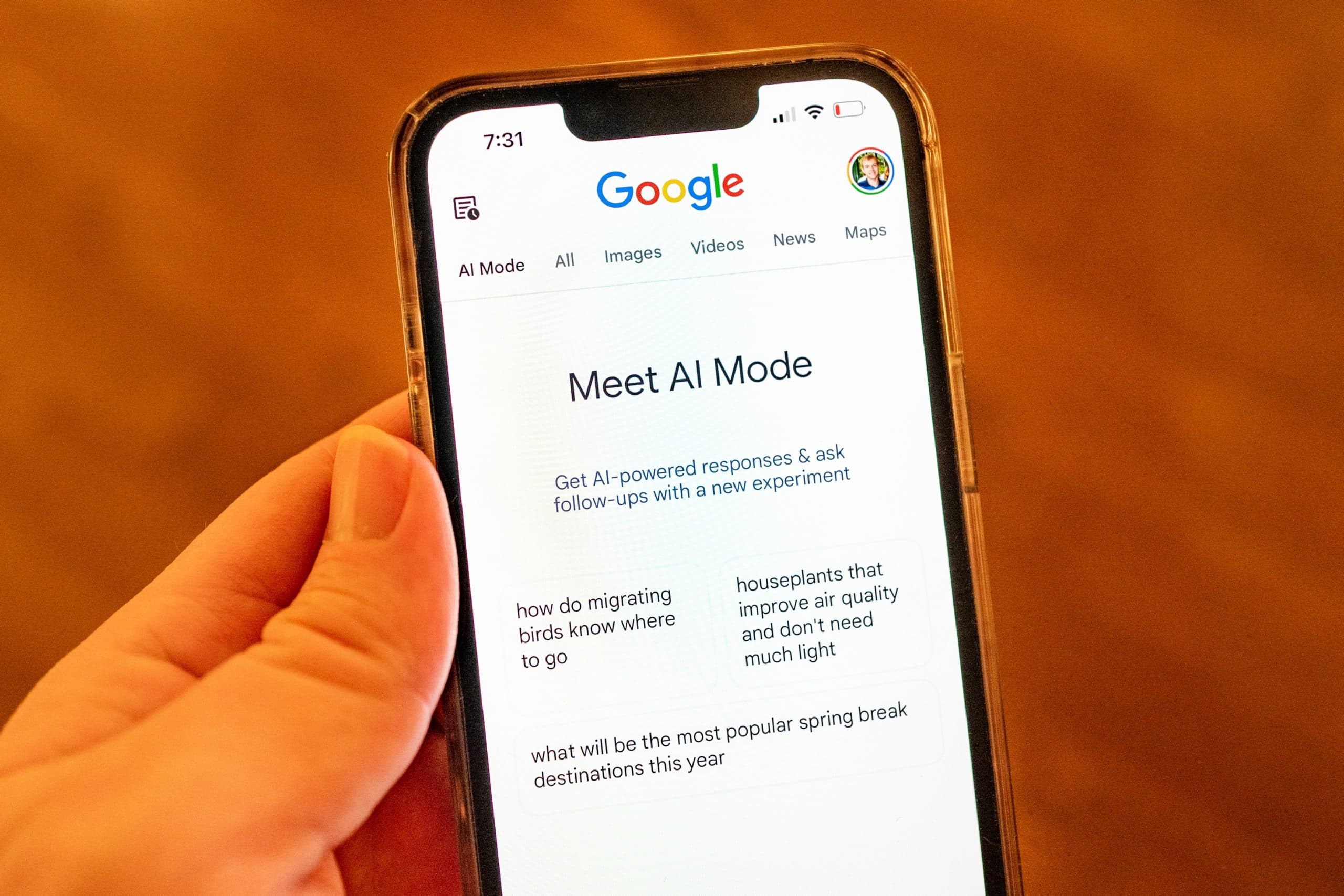
Google’s decision to move Canvas out of its limited Labs phase and into general availability for U.S. users in English—both in Search AI Mode and the standalone Gemini app—marks a strategic push to normalize in-browser generative creation within core consumer workflows. According to TechCrunch’s March 4, 2026 report, this shift places an interactive prototyping workspace one click away from Google’s dominant search surface, drastically lowering the adoption barrier for casual and first-time users [EVIDENCE: TechCrunch]. Yet the same integration that drives reach also exposes a tension between frictionless access and feature fragmentation: free users gain a baseline Canvas, while AI Pro and Ultra subscribers unlock advanced models, a 1M-token context window, and deeper modes—all of which remain gated by paid tiers.
Breaking down the rollout
TechCrunch confirms that the expanded availability covers both the Search AI Mode interface and the Gemini app in English across the U.S. This dual-surface approach aligns Canvas with high-intent search queries, meeting users “where they already are” in discovery workflows and reducing the need for separate app installs or tab switching [EVIDENCE: TechCrunch].
Functionally, Canvas now supports image and PDF uploads, enabling users to sketch, annotate, or generate assets side-by-side with chat-driven iteration. Google has indicated that integration with Drive, Sheets, and Docs is planned for later in 2026, suggesting a phased build-out of deeper enterprise file support [EVIDENCE: Google announcement].

Subscription-based capability tiers
- Free tier: Access to baseline Canvas features powered by standard Gemini models. Limited context length and core generative creation functions.
- AI Pro: Reportedly unlocks Gemini 3 Pro, enabling longer prompts and more advanced modes—but precise performance metrics remain those “reported by Google” rather than independently benchmarked [EVIDENCE: TechCrunch].
- AI Ultra: Adds access to Gemini 3 Deep Think and a 1M-token context window for complex, multi-step projects. Details on real-world throughput and hallucination rates are yet to be disclosed.
Core use cases and limitations
- Rapid prototyping: Users can generate and refine visual mockups, text elements, and diagrams without leaving the search interface.
- Code generation and testing: Canvas can produce runnable code snippets and support in-place execution via chat prompts.
- Shareable outputs: Work-in-progress artifacts can be exported or shared directly, favoring iteration speed over heavy documentation.
- File inputs: Images and PDFs are live; full Google Drive and Docs integration is slated for later in 2026, limiting immediate value for teams reliant on internal document repositories.
Industry context and competitive landscape
Embedding generative tooling into Search positions Google to outflank standalone platforms like OpenAI’s Canvas or ChatGPT multimodal features by leveraging its entrenched user base. It also overlaps with Google’s own NotebookLM, though the two serve different roles: Canvas emphasizes creation and prototyping, while NotebookLM remains a knowledge synthesis assistant. Third-party alternatives may retain advantages in specialized integrations, privacy controls, or enterprise-grade compliance.
Fragmentation and governance risks
The subscription gates create functional silos that can complicate cross-team collaboration. Teams on free plans face token limits that abruptly truncate long-form workflows, while Pro and Ultra subscribers may contend with hallucination or performance variability that Google has not yet independently verified. Broad consumer availability heightens the exposure of personally identifiable or proprietary data—particularly given the absence of enterprise-grade controls or clear SOC/ISO compliance details for file handling.

Potential stakeholder scenarios
Consumer product teams
These teams will find embedded Canvas an enticing lever for rapid feature prototyping and user testing in search-anticipated contexts. At the same time, the tiered model creates decision points around whether to embrace baseline free features or factor in upgrade costs for deeper context processing and advanced modes.
Enterprises in regulated industries
Enterprises handling sensitive data will face a governance calculus as full Drive and Docs support remains pending. Without explicit controls, file uploads could expose PII or intellectual property—prompting compliance groups to weigh pilot trials against risk of data leakage.
Engineering and research groups
Engineering teams exploring generative code collaboration will observe variance in model outputs across subscription levels, with potential bottlenecks in free-tier token caps. Research groups may reserve judgment on the declared 1M-token window until third-party benchmarks address performance consistency and hallucination rates.

Security and compliance functions
Security officers will map the expanded Canvas footprint against existing cloud and data classification policies. With governance still emerging, they may forecast areas of friction around auditability of AI-generated artifacts and unauthorized file sharing.
Future implications
Google’s Search-embedded Canvas signals a broader shift toward ambient generative capabilities in consumer contexts. The balance it strikes between immediate user reach and subscription-driven feature ceilings will inform how organizations architect AI workflows: whether to lean into low-friction prototypes or to defer until unified, enterprise-grade integrations and governance guardrails arrive. As Google rolls out deeper Drive/Docs support and clarifies compliance standards, the power dynamics between mainstream adoption and enterprise control will continue to evolve.