What Changed and Why It Matters Now
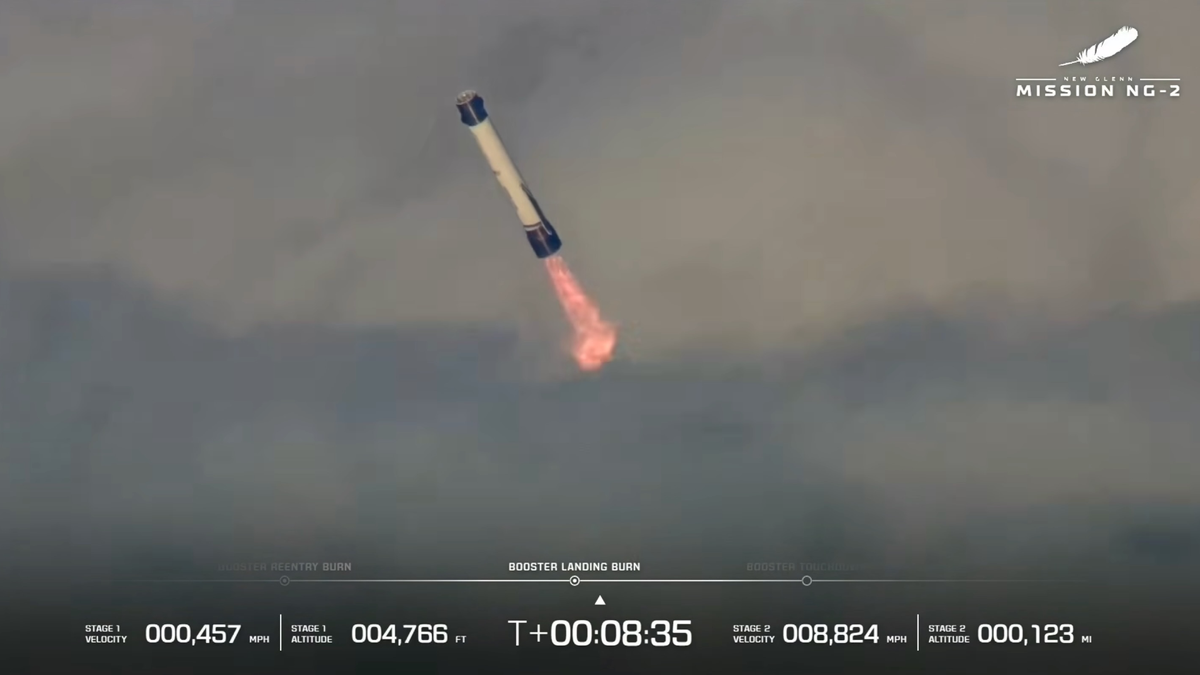
Blue Origin stuck its first drone‑ship landing of the New Glenn booster on the vehicle’s second flight and successfully deployed twin NASA spacecraft bound for Mars ~34 minutes after liftoff. That makes Blue Origin only the second company to land an orbital‑class booster on a drone ship, a cornerstone capability for high‑cadence, lower‑cost launch. For operators, this is the first credible sign that a second reusable heavy‑lift provider could soon pressure prices and expand capacity beyond SpaceX-if Blue can prove refurbishment and reflight.
Key Takeaways
- New Glenn’s booster touched down ~10 minutes post‑launch; the upper stage deployed NASA’s twin Mars spacecraft ~34 minutes after liftoff-two critical system milestones in one mission.
- Reusability economics are now plausible for Blue Origin, but unproven: booster turnaround time, refurbishment cost, and reflight reliability remain the gating variables.
- If reflight is demonstrated in 2025, expect downward price pressure in heavy‑lift, more schedule resilience for constellation operators, and a stronger competitive counterweight to SpaceX.
- Until reliability data accumulates, insurers and government buyers will likely assign a risk premium to New Glenn missions; early payloads should plan for schedule and margin buffers.
- This progress positions Blue Origin to compete more credibly for civil science, lunar, and future national security missions once flight heritage thresholds are met.
Breaking Down the Announcement
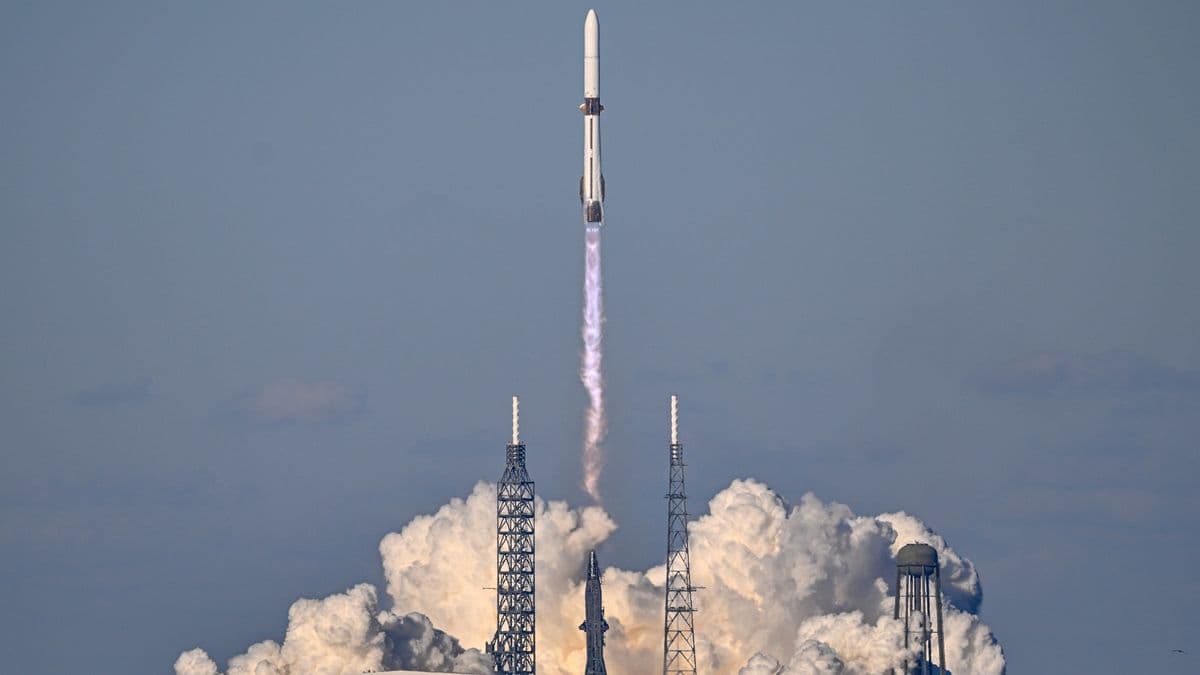
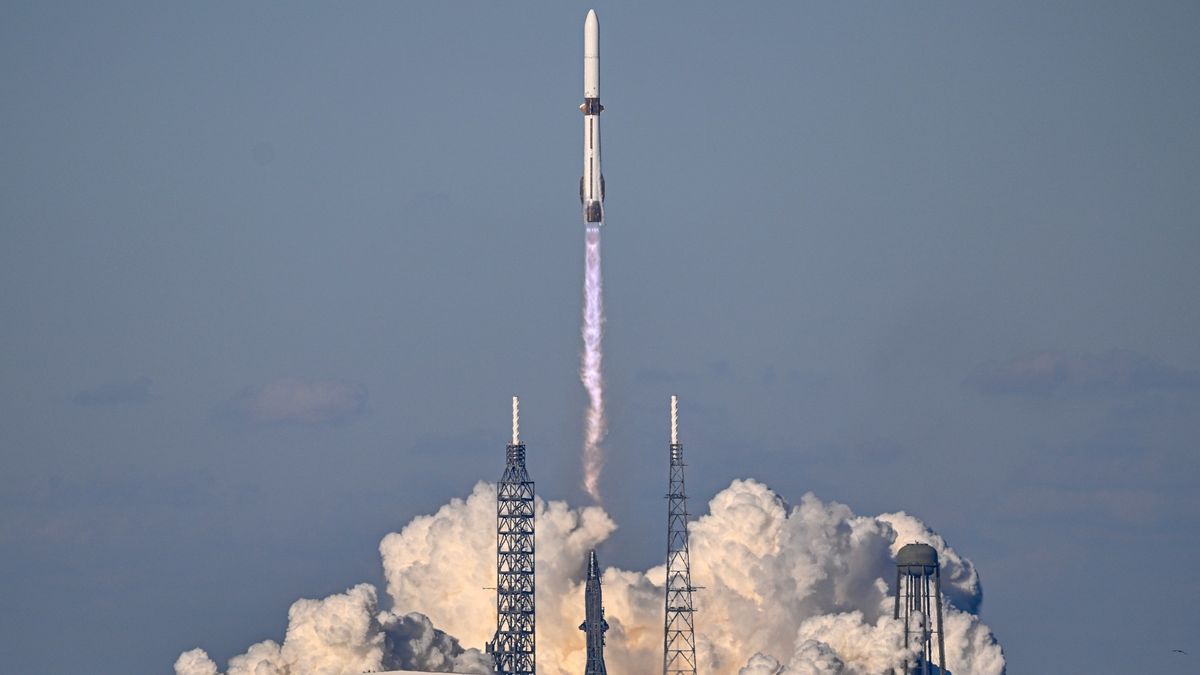
New Glenn lifted off from Launch Complex 36 in Cape Canaveral, Florida. Around four minutes into flight, the second stage separated and continued its ascent while the first stage began a powered return. The 189‑foot‑tall booster touched down on a drone ship in the Atlantic roughly 10 minutes after launch. The upper stage then deployed a pair of NASA spacecraft headed to Mars to study the planet’s atmosphere-New Glenn’s first commercial payload delivery.
This success followed a failed landing attempt on New Glenn’s debut earlier this year. Blue Origin worked with the FAA on corrective actions and returned with a clean landing on attempt two—a notable engineering and regulatory turnaround, though one success does not establish operational reliability.
Why This Matters for Operators and Buyers
Heavy‑lift launch supply has been constrained, with most reusable capacity concentrated at SpaceX. A second reusable heavy‑lift option could improve availability for large GEO satellites, deep‑space missions, and multi‑satellite LEO batches. Diversification also reduces single‑supplier risk, which has become a board‑level concern for operators planning multi‑launch campaigns.
Reusability is the cost lever. SpaceX’s economics improved materially once booster reflight became routine, driving lower marginal costs and faster cadence. Blue Origin’s successful landing introduces the possibility of similar unit‑cost reductions—if refurbishment cycles are fast, predictable, and low‑touch. The next data point that matters is how quickly Blue can inspect, repair, and refly this booster, and at what cost relative to a new build.
The Mars payload insertion is also nontrivial. Accurate interplanetary injection demonstrates upper‑stage precision and mission design capability, increasing confidence for science customers that need specific trajectories and long transfer windows. That’s a different bar than simple LEO deployment.
Competitive Context
SpaceX remains far ahead, with hundreds of successful booster landings and rapid turnaround now routine. ULA’s Vulcan is ramping, Ariane 6 is entering service, and next‑gen reusable contenders (Rocket Lab’s Neutron, Relativity’s Terran R) are still pre‑operational. New Glenn is the first heavy‑lift entrant since Falcon Heavy to showcase landing on a drone ship, the operational model most compatible with high‑cadence coastal launches.
New Glenn’s maturation also matters for Blue Origin’s broader portfolio: lunar lander ambitions, large commercial customer manifests, and potential eligibility for future national security missions. Many of those opportunities require proven reliability—typically multiple consecutive successful flights—before contracts move from paper to payload.
Risks and Unknowns
- Refurbishment and reflight: Can Blue turn a landed booster around in weeks, not months, and at predictable cost? The answer defines long‑term pricing.
- Cadence and manufacturing: Engine throughput, stage production, and drone‑ship availability will constrain 2025-2026 flight rates.
- Landing reliability in varied conditions: Drone‑ship recovery must work across sea states and mission profiles, not just ideal weather.
- Insurance and customer risk tolerance: New vehicle premiums and mission assurance processes may push early customers to less time‑critical payloads.
- Upper‑stage reuse (longer term): Today’s success doesn’t address second‑stage reusability, which is key to step‑change cost reductions later in the decade.
What to Watch Next
- Blue Origin’s first booster reflight target date and the observed turnaround time.
- Any disclosed pricing or incentives for reflown New Glenn missions versus expendable.
- Frequency of successful landings across different mission energies and weather windows.
- Manifest updates for government science, lunar, and large constellation customers as reliability builds.
Recommendations
- Satellite operators: Engage Blue Origin now for provisional slots, but negotiate price‑protection and performance‑based milestones tied to reflight proof and cadence.
- Government and science missions: Consider New Glenn for missions with schedule flexibility; maintain a dual‑provider strategy until 3-5 successful flights establish reliability.
- Constellation programs: Use New Glenn as a hedge to de‑risk supply concentration; pilot a small batch early to validate operations, insurance, and ground logistics.
- CFOs and risk leads: Model two scenarios—expendable pricing and reflown pricing—and tie commitments to demonstrated turnaround times and insurer readiness.