What Changed and Why It Matters
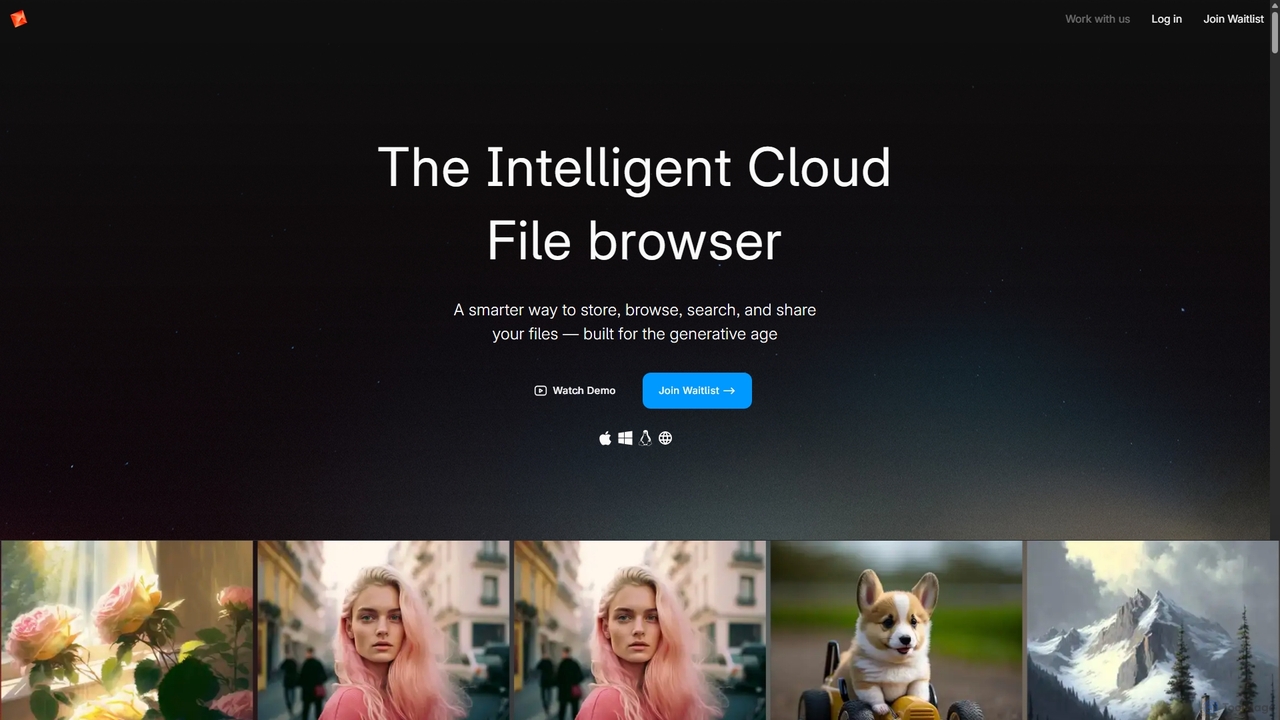
YC-backed Poly has relaunched as a cloud-first AI file organizer that centralizes your files for natural-language search, summarization, and collaboration. The company is offering 100GB free at launch (with a $10/month 1TB tier), supports text, PDFs, Office docs, images, audio, video, and web links, and ships on the web and Mac today (Windows is “coming soon”). It also includes an MCP server so teams can pull Poly data into tools like ChatGPT and Cursor.
This matters because most “AI search” tools index the mess where it lives; Poly is betting that moving content into a structured cloud drive yields better recall and more reliable answers. If the search quality holds and the 100GB free tier sticks, Poly could undercut incumbents like Google Drive, Dropbox, and Box for individual knowledge workers and small teams-provided the trust, governance, and integration gaps are addressed.
Key Takeaways
- Value: 100GB free is unusually generous; 1TB at $10/month undercuts many incumbents.
- Capability: Natural-language search, summarization, translation, tagging, and auto-organization across files and URLs, plus shared drives for collaboration.
- Gaps: No native sync connectors yet and no direct photo sync; limited “latest web” knowledge today; Windows client not yet available.
- Integrations: MCP server enables use inside ChatGPT/Cursor; broader enterprise integrations and SSO are not announced.
- Governance: No published details on certifications, data residency, retention controls, or admin policies-must be validated before enterprise adoption.
- Positioning: Directly competes with Drive/Dropbox and overlaps with Google’s NotebookLM; strength is organization + storage, not multimedia generation.
Breaking Down the Announcement
Poly’s new product is a cloud drive with AI layered natively on top. You upload content (documents, media, and URLs), apply tags, and ask questions in natural language. The system can summarize, translate, create new folders, and rename files automatically-useful for teams that want consistent naming. Early users also highlight a practical win: drop a YouTube link and get a usable summary.
It is not a full research agent yet. The product currently lacks live web knowledge and cannot generate multimedia outputs the way some NotebookLM projects can. The company says it plans to add web search, stylized report generation, a text/Markdown editor, custom metadata, Google Docs link ingestion, and agentic spreadsheet analysis. Collaboration starts with shared drives and Q&A over shared content, with direct file/folder sharing coming.

On integrations, Poly offers a Model Context Protocol (MCP) server so data can be accessed from compatible AI tooling. That is a smart bridge for developer teams, but it’s not a substitute for native two-way sync with major suites. The founder signals support for “virtual file references,” which could ease importing from other services, but there’s no turnkey sync today.
Industry Context and Competitive Angle
The crowded “AI knowledge” market splits into two camps: federated search that indexes your existing systems (e.g., enterprise search like Glean or AI features inside Box/Slack) and centralized workspaces that ask you to move content into a curated hub (e.g., NotebookLM projects, Notion AI spaces). Poly lands in the second camp and differentiates on storage economics and file-system operations baked into the AI.
Compared to Google Drive and Dropbox, Poly’s 100GB free is a standout—most free tiers are 2-15GB. If its semantic search truly outperforms incumbents, Poly becomes compelling for researchers, creators, and small project teams. NotebookLM remains stronger for media output and Google-native docs; Box is stronger for enterprise compliance and admin controls; Drive/Dropbox still win on long-tested sync, ecosystem reach, and offline clients.
Timing is notable. After Dropbox wound down its Dash experiment and Microsoft/Google refocused AI around their suites, there’s a lane for an independent, AI-first drive—especially if it can be used via ChatGPT through MCP. But winning teams from incumbents requires more than quality search: rock-solid sync, admin controls, and clear security posture are table stakes.

Operator’s Perspective: Risks and Constraints
- Security and compliance: Poly has not publicly detailed encryption, data residency, certifications (e.g., SOC 2), retention, or audit logs. Without this, regulated data should not be onboarded.
- Lock-in and portability: Centralizing content increases switching costs. Confirm bulk export, deletion guarantees, and egress options before committing.
- Integrations: Lack of native connectors means manual upload or bespoke pipelines. MCP helps for retrieval, not for structured sync or governance.
- Quality and drift: Auto-rename/folder creation can help—or create chaos. Test on a constrained corpus and lock naming policies before scaling.
- Latency and cost: Summarization and translation at scale imply compute costs that could affect response times or future pricing. Monitor performance under load.
What This Changes
For individuals and small teams, Poly offers a credible “AI-first drive” that can actually replace ad hoc project folders and produce fast, useful answers across mixed media. For larger organizations, it’s a candidate for targeted pilots where content can be centralized safely (e.g., a research team’s working set), but not yet a system-of-record replacement for Drive/Box without enterprise controls.
Recommendations
- Run a 14-30 day pilot with a bounded dataset (e.g., 25-50GB of mixed docs and media). Measure answer quality, query latency, summarization accuracy, and team recall versus your current Drive/Dropbox.
- Demand a security brief: encryption at rest/in transit, key management, data residency, retention/deletion, admin controls, audit trails, and any certifications roadmap. Do not ingest regulated data until verified.
- Define guardrails: disable or tightly scope auto-rename/folder creation; establish naming conventions; validate MCP usage and permissions from ChatGPT/Cursor before enabling for teams.
- Plan for portability: confirm bulk export, version history availability, and exit processes. Ask for a committed ETA on the Windows client and native connectors relevant to your stack.
Bottom line: Poly’s relaunch combines a generous free tier with promising AI retrieval in a clean, cloud-first package. If your pain is scattered files and weak recall, it’s worth a pilot. If you need enterprise-grade controls today, wait for the security and integration story to mature.