What Changed and Why It Matters Now
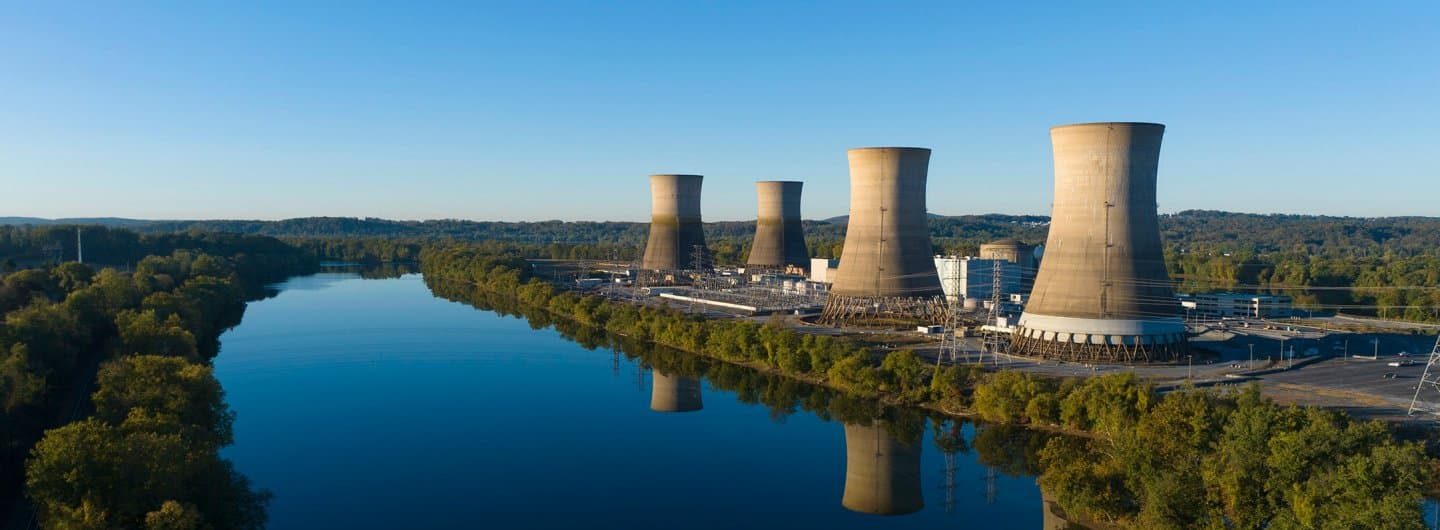
The U.S. Department of Energy’s Loan Programs Office (LPO) will lend $1 billion to Constellation Energy to restart Three Mile Island Unit 1, and Microsoft has committed to buy all 835 MW of output for 20 years once the plant returns in 2028. Jefferies pegs the probable price at $110-$115 per MWh-well above wind or solar (even with batteries) but buying 24/7, carbon-free baseload in one stroke. For hyperscalers and AI operators, this is a decisive shift from green attributes to firm, physical power-and it resets the cost and strategy for data center energy procurement.
Key Takeaways
- Scale and spend: 835 MW could yield ~6.7-7.0 TWh/year at typical nuclear capacity factors. At $110-$115/MWh, that’s roughly $740–$800 million per year, or ~$15–$16 billion over 20 years (assuming flat pricing).
- Premium for reliability: It’s pricier than new renewables, but it provides firm, 24/7 carbon-free power-critical for AI training and always-on inference where curtailments or outages can cost six figures per hour in GPU idle time.
- Policy-assisted finance: The $1B DOE loan de-risks refurbishment under a program with a 3.3% default rate after recoveries, but timelines and approvals (NRC, local permits) still pose execution risk.
- Signaling effect: Expect more life-extensions and restarts of existing nuclear, not just talk of SMRs. Buyers will move from REC-based “clean” claims to hourly, physical supply.
- Reputation and governance: Association with Three Mile Island raises communications risk. Buyers need clear rationale on safety, compliance, and 24/7 carbon metrics.
Breaking Down the Announcement
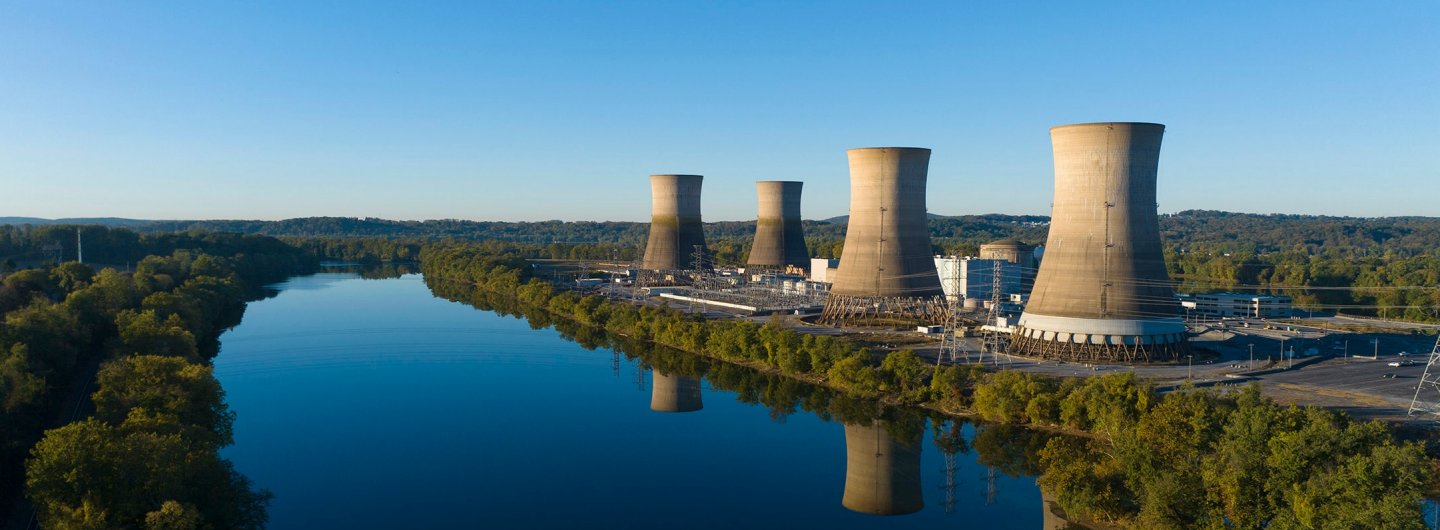
Constellation estimates $1.6 billion to refurbish Unit 1, which was commissioned in 1974 and shut in 2019 when cheap gas crushed margins. This is not the Unit 2 reactor that melted down in 1979. The DOE financing comes via the LPO—best known for both the Solyndra failure and the Tesla success—with an overall default rate of 3.3% after recoveries. The program’s current branding under this administration is the Energy Dominance Financing Program, and it can support restoring existing power plants that cut pollution or greenhouse gases.
Terms of Microsoft’s deal weren’t disclosed. Jefferies’ $110–$115/MWh estimate implies a deliberate premium against Lazard’s recent LCOE ranges for onshore wind and utility-scale solar (often $24–$66/MWh at the low end) and even some renewable-plus-4-hour-storage configurations. However, that comparison misses the firming dimension: 4-hour batteries don’t guarantee 24/7 coverage across seasons. A single 835 MW nuclear block does.
Meta’s recent arrangement with Constellation in Illinois acquired clean energy attributes from a 1.1 GW nuclear plant; Microsoft’s move is notably more operational—committing to the electricity itself, not just credits.
What This Changes for AI and Cloud Operators
AI power demand is straining interconnections and elevating uptime risk. Anchoring a portfolio with firm, zero-carbon baseload addresses three problems at once: hourly carbon matching, operational continuity for long training runs, and hedging against volatile wholesale prices.
Consider cost-of-downtime math: An AI training cluster of 10,000 H100s could easily represent more than $120,000 per hour in compute cost at public cloud on-demand rates. Unplanned curtailments during multi-week runs can erase days of work or force checkpoint rollbacks. A higher $/MWh can be rational if it materially reduces disruption risk.
In scale terms, ~6.9 TWh/year can supply roughly eight 100 MW data center campuses at high utilization (100 MW x 8,760 hours ≈ 0.876 TWh/year per campus). That’s a strategic block of capacity in a single deal—rare in today’s constrained interconnection environment.
Competitive Angle: How This Stacks Up
By the numbers, new nuclear remains the most expensive option; life extension and restart projects occupy a middle ground, often cited at $60–$110/MWh. Wind and solar beat nuclear on unit cost, and solar-plus-4-hour storage is frequently below $110/MWh in favorable markets. The gap is reliability and temporal matching. Achieving true 24/7 coverage with renewables requires overbuild, transmission, and longer-duration storage that is still immature and often unfinanceable at hyperscale timelines.
Alternatives include hydro-rich regions (limited and location-bound), gas with CCS (technology and policy risk), or behind-the-meter gas (emissions and permitting headwinds). Small modular reactors (SMRs) are not bankable at scale today; first-of-a-kind timelines and costs remain uncertain. For the next five years, extending existing nuclear may be the only bankable pathway to large, firm, carbon-free blocks in many U.S. regions.
Risks, Policy, and Timeline Realities
Execution and regulatory risk are real. Restarting a previously shuttered unit requires NRC approvals, updated safety and security compliance, and community engagement. The DOE press release language around the enabling authority has already shown inconsistencies—underscoring the need for buyers to diligence program provenance and conditions. The facility also relies on timely refurbishment; 2028 in-service is ambitious for a first-of-its-kind restart.

Financially, locking a 20-year premium could look expensive if wholesale prices fall—yet it’s a hedge against capacity scarcity and future carbon pricing. Federal incentives, like the IRA’s zero-emission nuclear production credit (up to ~$15/MWh, subject to limits), may improve project economics even if the PPA price is fixed.
Operator’s Playbook: What to Do Next
- Build a firm-clean foundation: Target 20–40% of campus load from firm zero-carbon sources (nuclear, hydro, geothermal) to stabilize 24/7 operations, then layer cheap renewables for cost optimization.
- Structure for reliability, not optics: Favor physical or shaped supply with hourly matching and capacity rights over unbundled attributes. Include penalties, availability guarantees, and curtailment protections.
- Hedge with optionality: Use step-up/step-down rights, indexed pricing, and portfolio diversification across plants and regions. Avoid single-asset concentration risk.
- Start siting with interconnection in mind: Prioritize regions with existing firm generation and available transmission (e.g., PJM sites near retiring or restartable units). Engage utilities early.
- Governance and comms: Prepare a nuclear-specific risk narrative—safety, compliance, and community benefits. Tie deals to 24/7 carbon goals and uptime SLAs to justify the premium.
Bottom line: Microsoft’s move puts a price on firm, carbon-free reliability that others will now have to match or strategically counter. If your 2027–2030 AI roadmap assumes cheap, always-on, green power without long-term firming, this announcement is your cue to revisit the model.