What changed – and why it matters
Black Forest Labs closed a $300 million Series B at a $3.25 billion valuation to accelerate its FLUX image‑generation suite, notably FLUX.2 (capable of production‑grade, up to 4K outputs and multi‑image style conditioning). The round – led by Salesforce Ventures and Anjney Midha with participation from major VCs and strategic partners – signals rising enterprise demand for high‑fidelity, controllable image AI and fresh competitive pressure for Adobe, OpenAI, Microsoft and incumbent creative platforms.
- Money and timing: $300M Series B after a $31M seed ~10 months earlier — rapid scale and investor conviction.
- Product shift: FLUX.2 emphasizes photoreal 4K outputs, identity consistency across hundreds of assets, multi‑reference conditioning and precise control.
- Enterprise signal: Reported adopters (Adobe, Grok) plus Azure integration indicate commercial traction and enterprise channel strategy.
Breaking down the announcement
The substantive change is capital plus product readiness. The $300M bankroll funds R&D, expanded engineering headcount, and the compute and infra needed to serve high‑resolution image inference at scale. FLUX.2’s stated capabilities address four enterprise pain points: resolution/fidelity, brand/identity consistency, physical realism (lighting/materials), and granular controls for professional workflows.
Key technical and commercial details
- Resolution & control: FLUX.2 targets production 4K outputs and multi‑image style conditioning — enabling a single model to take multiple reference images and preserve style/identity.
- Identity persistence: Claimed ability to maintain character identity across hundreds of assets targets marketing, catalog, and game‑asset pipelines.
- Distribution options: API for SaaS integration, browser playground for prototyping, open‑weight releases for on‑premises deployment, and Azure AI Foundry partnership for managed enterprise access.
- Team & pace: ~50 employees; growth will be capital‑intensive (hiring ML researchers, infra engineers, and enterprise sales).
Why now
Two trends converge: enterprises demand higher asset throughput and brand‑safe control, and model research has reached a point where physical realism and multi‑reference conditioning are commercially viable. Incumbents are integrating image models into suites (Adobe, Microsoft), so a specialized player with deeper visual research can capture verticals where fidelity and control matter more than broad, generalist tools.
Competitive and risk assessment
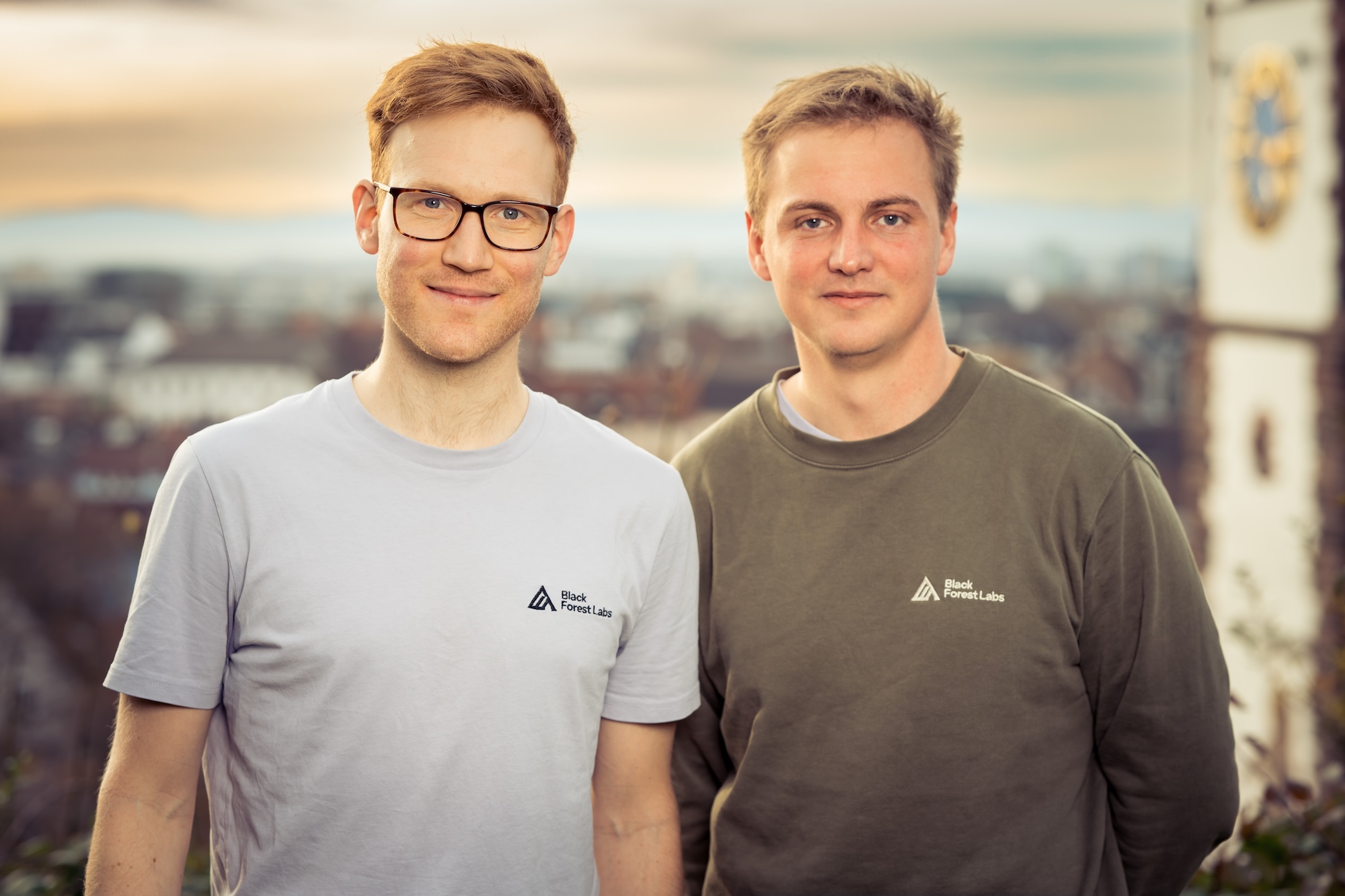
Where Black Forest Labs wins: specialization, research pedigree (founders connected to latent diffusion lineage), and product features tuned for enterprise workflows. Where it’s vulnerable: a small headcount relative to hyperscalers, dependence on continued funding to scale infra, and legal/regulatory exposure tied to image IP and misuse (deepfakes, impersonation).
Compared to Adobe/OpenAI/Microsoft: those firms offer broader ecosystems and sales channels; Black Forest’s advantage is deeper control over image‑specific problems. Expect platform partners (Azure, creative suites) to be decisive for large enterprise uptake.
Governance, compliance and operational considerations
FLUX.2’s identity consistency is a commercial asset but a misuse vector. Enterprises must assess copyright provenance, model training data lineage, fair‑use exposure, and privacy implications for synthetic likenesses. Open‑weight distribution eases compliance for on‑prem deployments but shifts responsibility for safety patches and monitoring to the buyer. High‑resolution inference materially increases compute and cost — expect higher per‑image cloud spend or significant GPU capex for in‑house hosting.

What this means for buyers and operators
- Marketing & creative teams: Pilot FLUX.2 for campaign variants, brand templates, and catalog imagery to validate identity consistency and creative controls.
- Product & infra leaders: Model resolution increases compute needs — budget for GPU capacity or negotiate enterprise pricing with providers; test latency under production loads.
- Legal & compliance: Require model provenance, a red‑team for misuse scenarios, and contractual IP indemnities if using open weights or API.
- Vendor strategy: Use the API for speed to market; use open weights only after governance frameworks and hardened inference stacks are in place.
Recommendations — immediate next steps
- Run a 90‑day pilot via API with clearly defined KPIs: image cost per asset, time‑to‑asset, identity consistency score, and latency at scale.
- Parallel R&D: evaluate open‑weight deployment on isolated infra for sensitive assets; measure TCO vs cloud API.
- Conduct an IP/data‑lineage assessment and a misuse red‑team focused on impersonation and brand safety.
- Negotiate enterprise SLAs, usage caps, and indemnities before committing to wide deployment.
Bottom line: Black Forest Labs’ $300M raise and FLUX.2 capability move image generation from experimentation toward production for enterprises that need fidelity and control. That matters to product leaders — but adopting teams must budget for higher compute, enforce governance, and validate outputs before scaling.