Executive summary – what changed and why it matters
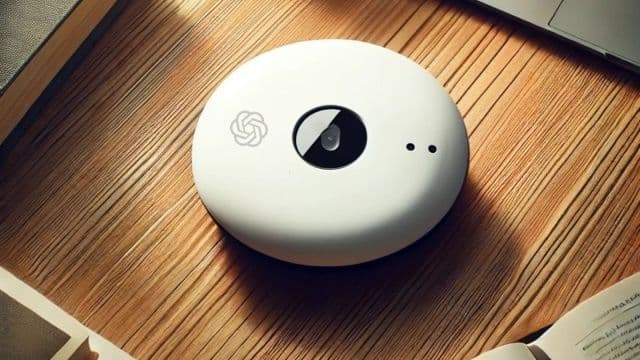
OpenAI announced it is building a pocket‑sized, possibly screenless AI device in collaboration with Jony Ive’s studio; a prototype exists and the team says it will ship in under two years. This is a deliberate move from app‑centric experiences toward an “ambient,” context‑aware interface that filters distractions and acts on users’ behalf – a potential new channel for consumer AI interaction.
- Impact: A dedicated, always‑available device changes UI, privacy, and integration models versus smartphone apps and smart speakers.
- Timing: Prototype exists; target ship window is “under two years.”
- Unknowns: No confirmed sensors, compute split (edge vs cloud), battery life, or pricing – all of which drive adoption and regulation.
- Risks: Persistent contextual awareness raises privacy, security, and regulatory concerns; developer platform and ecosystem are key to value.
Breaking down the announcement
Sam Altman framed the device as a contrast to today’s attention‑economy smartphones: simple, calm, and trusted to act for you. Jony Ive — brought in via OpenAI’s acquisition of his design studio io — described the product as intentionally naive in appearance but sophisticated in behavior. Those two positioning points tell product leaders two things: first, OpenAI wants a physical point of presence for its models; second, the product’s success will depend as much on UX and trust as on raw model performance.
Key capabilities claimed and the gaps
What we know: the device is pocket‑sized, rumored to be screenless, and designed to “filter” information and present it contextually. OpenAI says users should learn to trust it over time. What we don’t know: the interface (voice, haptics, LEDs), sensor suite (microphone, camera, IMU), whether inference runs locally or in the cloud, connectivity needs, battery life, cost, and developer SDK availability. Those unknowns determine latency, privacy posture, and app integration complexity.
Why now — market and tech context
This comes at a moment when large language models are mature enough to power continuous, context‑rich assistants and when consumer fatigue with notification‑heavy devices is rising. It also follows early entrants (for example Humane’s AI Pin) that proved the idea of a wearable/ambient AI is commercially plausible. For OpenAI, a device gives control over the experience and a physical product to demonstrate its approach to safe, filtered assistance.
Competitive angle — who this competes with and when to care
Compare this device to three classes of alternatives: (1) Smartphones running AI apps (Apple/Android), (2) smart speakers and earbuds (Amazon Echo, Google Nest), and (3) emerging ambient wearables (Humane AI Pin). Smartphones win on app ecosystems; smart speakers offer hands‑free but home‑bound experiences; ambient wearables target always‑on, proximate assistance. OpenAI’s device will need markedly better contextual UX or privacy guarantees to justify being a separate purchase.
Risks and governance considerations
Persistent contextual awareness implies constant sensing and long‑term personal data accumulation. That creates immediate privacy risks (sensitive audio/video capture), compliance obligations (GDPR, biometrics rules, location and recording laws), and security attack surfaces (voice‑command spoofing, remote data exfiltration). Operationally, enterprises should expect new supply‑chain and platform dependencies — and the need to update consent, data retention, and vendor risk processes.

What this changes for operators and product leaders
If OpenAI succeeds, product teams gain a new channel for consumer engagement that can reduce friction for hands‑free and accessibility use cases. But that channel will require new UX patterns (time‑aware prompts, multi‑modal fallbacks), stricter privacy defaults, and careful cost planning if inference is cloud‑based. Enterprises should not assume parity with smartphone experiences: latency, offline behavior, and integration will differ.
Recommendations — who should act and how
- Track proofs and developer announcements: wait for SDKs, privacy whitepapers, and hardware specs before committing integration work.
- Start privacy and security playbooks now: update consent flows, data minimization rules, and incident response to handle always‑on devices.
- Identify pilot use cases: hands‑free access for field workers, accessibility assistants, or curated consumer services where reduced notifications create measurable value.
- Plan for hybrid compute: design systems that can operate with intermittent connectivity or fall back gracefully if on‑device inference is limited.
TL;DR — OpenAI’s pocket device is potentially a meaningful new channel that privileges calm, trusted assistance over notification volume. It could reshape consumer AI interactions, but adoption depends on hard engineering (battery, latency), a developer ecosystem, and credible privacy and safety controls. For now, product and security leaders should watch closely, prepare governance, and line up pilot scenarios rather than commit to wide deployments.